
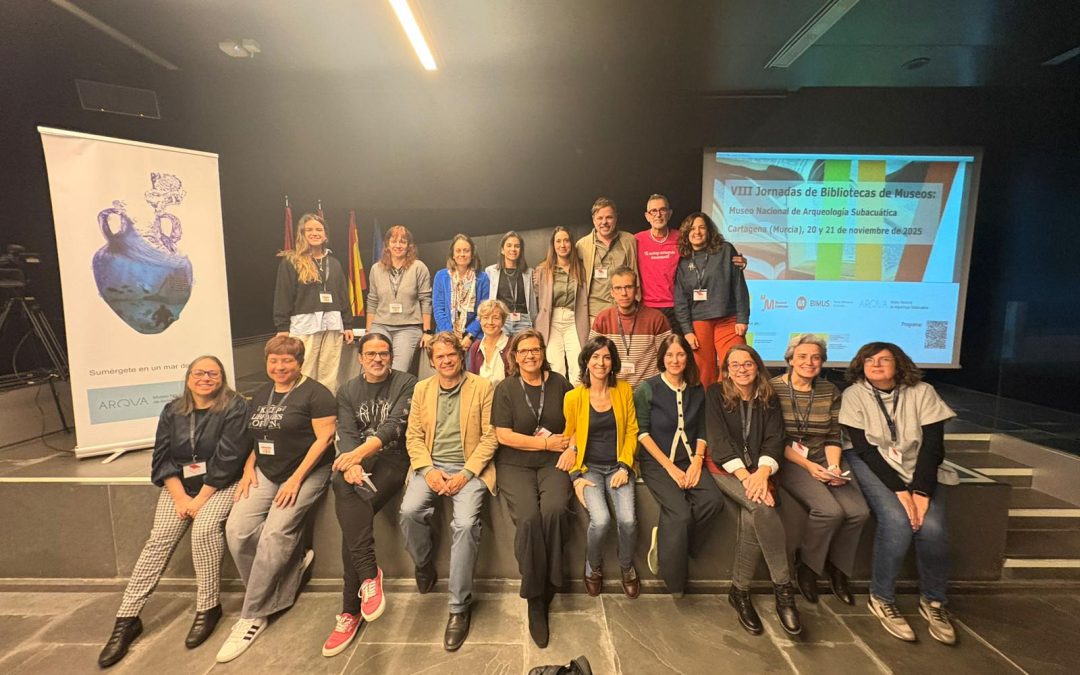
On 20 and 21 November 2025, a new edition of the Conference on Museum Libraries was held, organized every two years by the Museum Libraries Network (BIMUS) of the Ministry of Culture.
This network “was created with the aim of optimizing resources and processes, developing common library policies and services, and fostering cooperative work through the use of a collective catalogue. This catalogue promotes collaboration among the libraries that make up the network, brings museum libraries closer to society, highlights the value of the bibliographic collections safeguarded by these institutions, and offers users an important bibliographic information tool.”
It is made up of the libraries of the 16 state-owned museums directly managed by the Sub-Directorate General for State Museums of the Ministry of Culture, in addition to the National Museum of Performing Arts, which belongs to the National Institute of Performing Arts and Music (INAEM), the Museo Nacional del Prado, the Museo Nacional Centro de Arte Reina Sofía, the Museo Lázaro Galdiano, and the Instituto del Patrimonio Cultural de España (IPCE), bringing the total to 21 institutions.
This eighth edition’s main new feature was the relocation of the venue outside Madrid for the first time in its history, specifically to Cartagena, home to the Museo Nacional de Arqueología Subacuática (ARQVA), a member of the network.
The conference, held in both in-person and virtual formats, brought together nearly 130 participants who enjoyed both the official program (with several lectures and papers) and the social program, which included a visit to the ARQVA library and its permanent exhibition.
In this edition, the conference revolved around two thematic axes: museum libraries as centers for experimentation and research into cultural heritage—especially underwater archaeological heritage (Thursday, 20 November); and the application of new web-based technologies and open data in the processing and management of bibliographic collections (Friday, 21 November).
On Thursday the 20th, following the opening remarks by the authorities, the keynote lecture was delivered by Luka Bratović, from the International Centre for Underwater Archaeology in Zadar (Croatia), who explained the importance of the center’s documentation service and library for the study of underwater archaeology. Katariina Vuori, from the University of Finland, presented two case studies linking bibliotherapy with underwater cultural heritage. Next, Abraham Ramírez, ARQVA’s librarian, introduced the museum’s library as well as various documentary resources for the study of underwater cultural heritage.
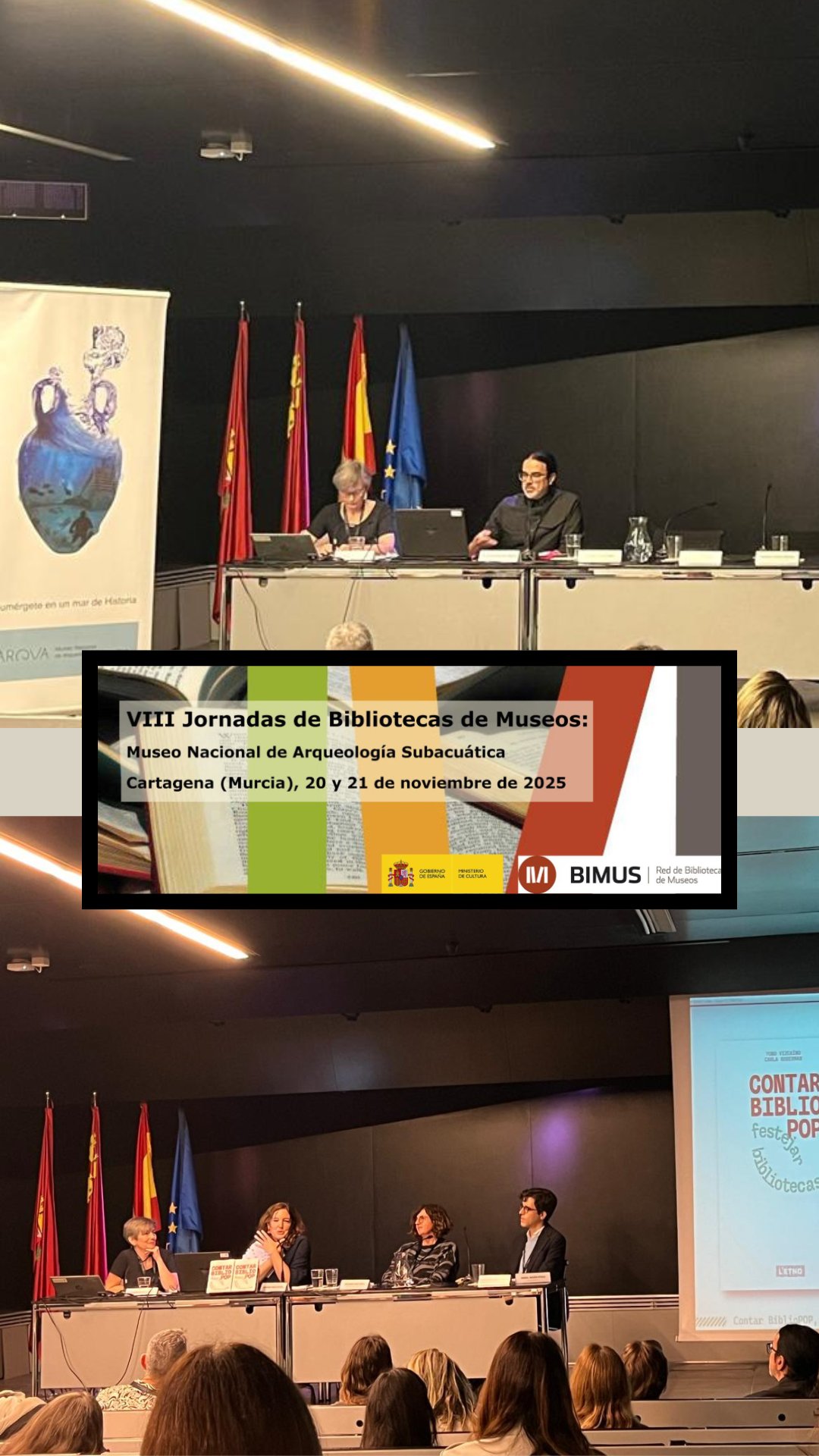
Photo 1: Presentation of papers © BIMUS
Following a call for papers, those selected by the BIMUS committee were presented. The first was delivered by Yolanda Fons, head of the Library of the Museu de Prehistòria de València, who spoke about the importance of reading clubs in disseminating archaeological collections. Israel Marín, from the library of the Museo del Greco, focused on the processes of adaptation and innovation carried out in the museum library. Amparo Pons, head of the library at L’ETNO, Museu Valencià d’Etnologia, discussed the popular culture project BiblioPOP. Irene Maseda, from the Sub-Directorate General for Publications and Cultural Heritage of the Ministry of Defence, presented various examples of gamification to be implemented in museum libraries as tools for engagement.
In the afternoon, Teresa Bastardes and Carmina Borbonet, from the Museo Disseny Hub Barcelona, explained their research laboratory, a project involving three areas of the museum. Rodrigo Vega, from Lancaster University, presented his project on the fleets of New Spain, based on artificial intelligence. The afternoon session concluded with a lecture-performance by Javier Pérez Iglesias, director of the library of the Faculty of Fine Arts at the Universidad Complutense de Madrid. He presented a drawing, a letter, a book, a fanzine, a performance, and a walk as ways of reflecting on how libraries and archives can transform their collections into vibrant materials.
Afterwards, participants visited the museum’s library and ARQVA’s permanent exhibition.
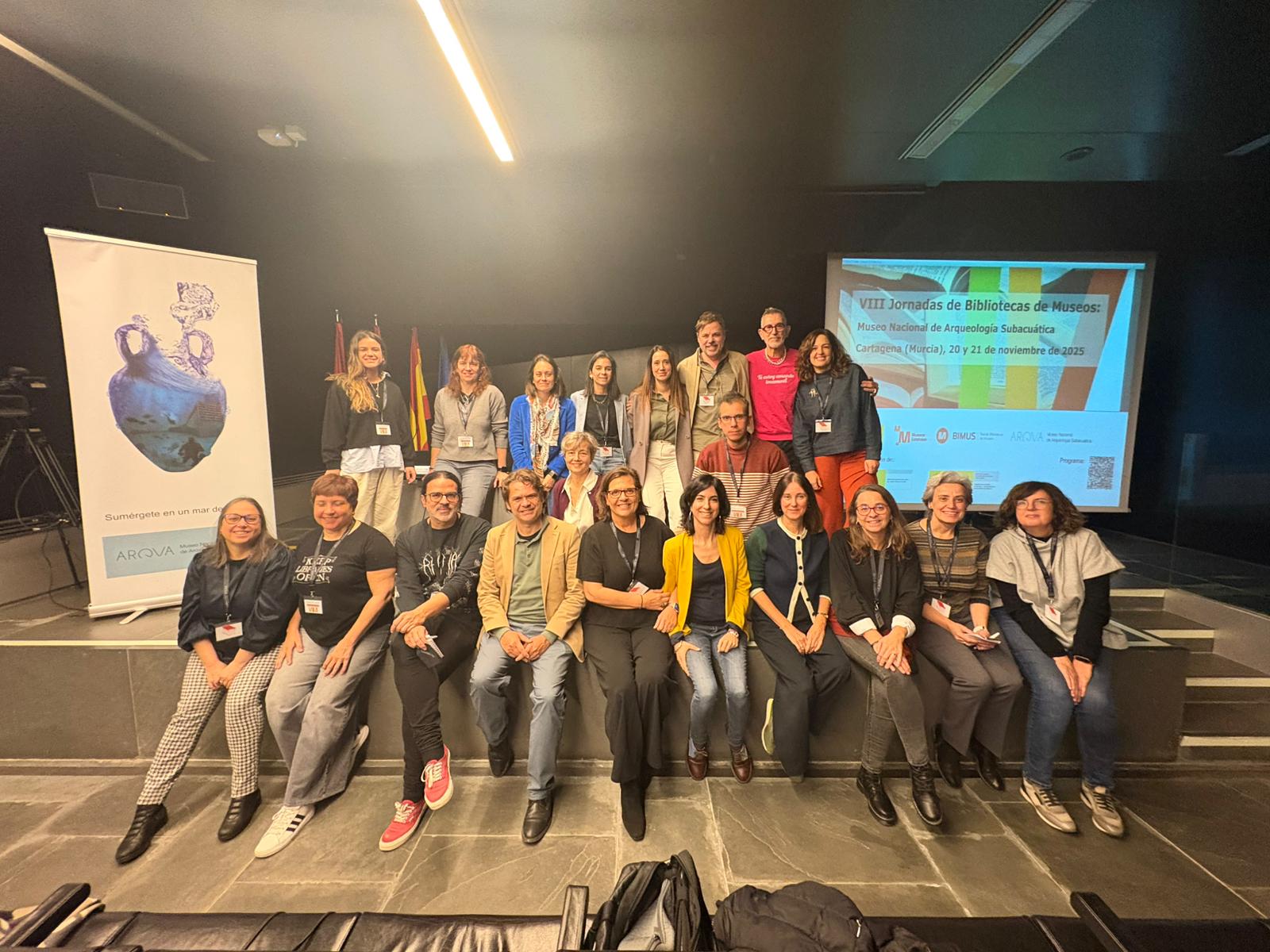
Photo 2: Some of the in-person attendees at the conference © BIMUS
Friday the 21st began with a lecture by Luis Martínez Uribe, director of the library and research support center of the Fundación Juan March, who presented the Foundation’s data laboratory (DataLab). Juan Sanz, from the University of Murcia–Spanish Navy, introduced a project for the automatic transcription of 19th-century historical manuscripts using OCR models and artificial intelligence. Gustavo Candela, from the University of Alicante, explained how to make better use of Wikidata to enrich museum data. Marta Bausán, head of section at the Library of the Museo del Prado, and Laura López, from the Dialnet Foundation, presented the alliance between their two institutions as a successful case for managing bibliographic collections in museum libraries. The final paper was delivered by Rosario Arquero, director of the IDEA Lab Research Group at the Faculty of Information Sciences of the Universidad Complutense de Madrid, who presented the virtual project/exhibition “Rediscovering ‘El Bote de Zamora/Bote de Subh.’”
The closing lecture was given by Mia Ridge of the British Library, who explained that institution’s example in the digital experimentation of its collections through artificial intelligence.
With this eighth edition, the Museum Libraries Conference, promoted by the Ministry of Culture, has consolidated its position as an essential biennial event for these institutions. It represents a fundamental meeting point for highlighting the incalculable value of the collections they hold, as well as for showcasing their most cutting-edge projects, demonstrating that they are up to date with the latest technological developments, including the arrival of artificial intelligence and its application to everyday work.
Congratulations to the organizers and to all the speakers and attendees—see you in 2027!
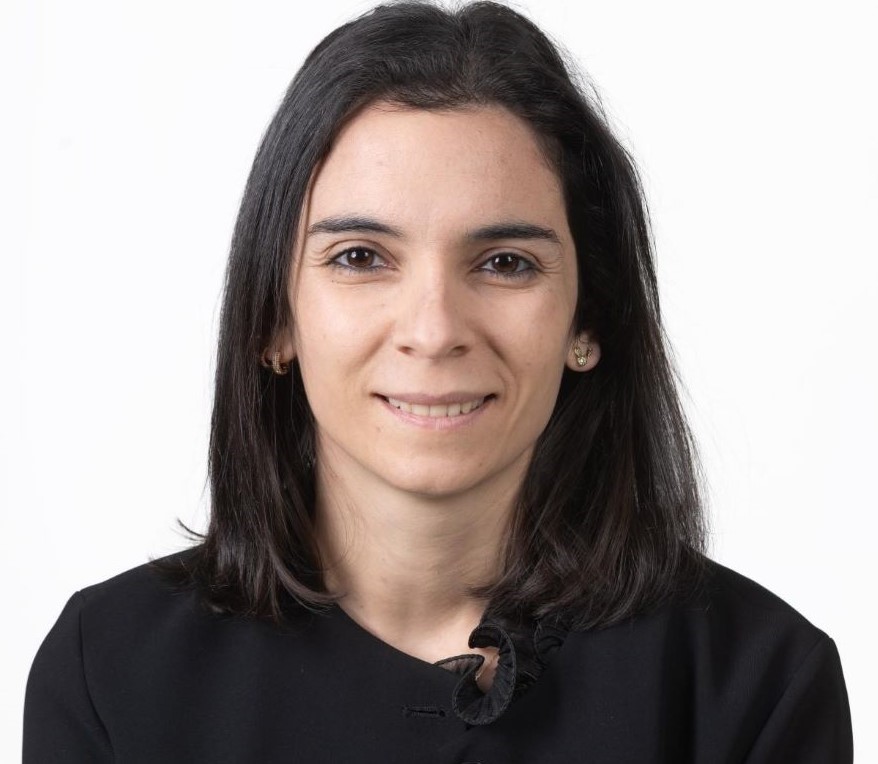
Paula Sánchez García
Jefa de sección de Biblioteca del Instituto del Patrimonio Cultural de España
ORCID: https://orcid.org/0009-0007-4453-5639
Redes sociales: Instagram: @ipcepatrimonio, Linkedin: Instituto del Patrimonio Cultural de España y Facebook: Instituto del Patrimonio Cultural de España