
Phonography, Heritage, and Sound Memory
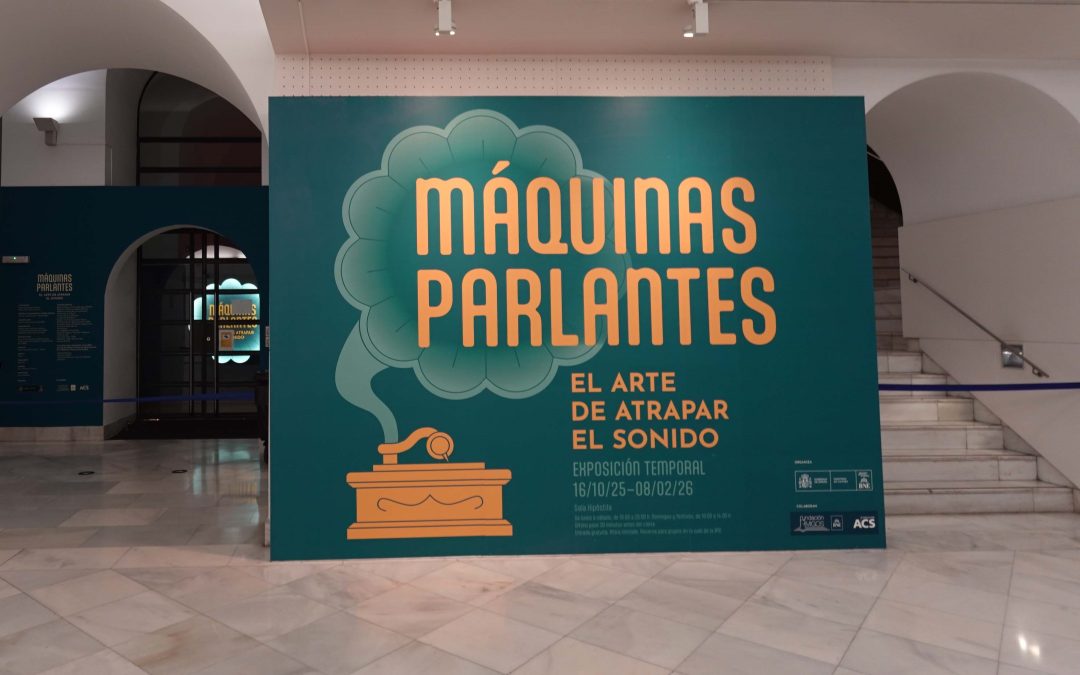
The exhibition Talking Machines: The Art of Capturing Sound offers a journey through the origins of sound recording and reproduction, highlighting a form of heritage that for a long time has been less visible than other types of documents: sound recordings and the machines that made their existence possible.
Curated by Áurea Domínguez and María Jesús López, the exhibition approaches phonography not only as a technological advance but also as a cultural, social, and documentary phenomenon that profoundly transformed the ways in which voices, music, and the sounds of the world around us could be preserved and disseminated.
From the perspective of information and documentation, this proposal is particularly relevant because it invites us to consider sound as a documentary object, with its own characteristics and with specific challenges in identification, description, preservation, and access.
Sound is a document in its own right, shaped by its medium, its context, and its forms of preservation.
The Birth of Talking Machines
From the late nineteenth century onwards, the emergence of the phonograph and, later, the gramophone marked a turning point in the history of sound. For the first time, spoken words and music could be fixed onto a medium, reproduced, and circulated beyond the moment of their performance. These talking machines inaugurated a new relationship between technology and culture, paving the way for the recording industry and for new forms of sound consumption.
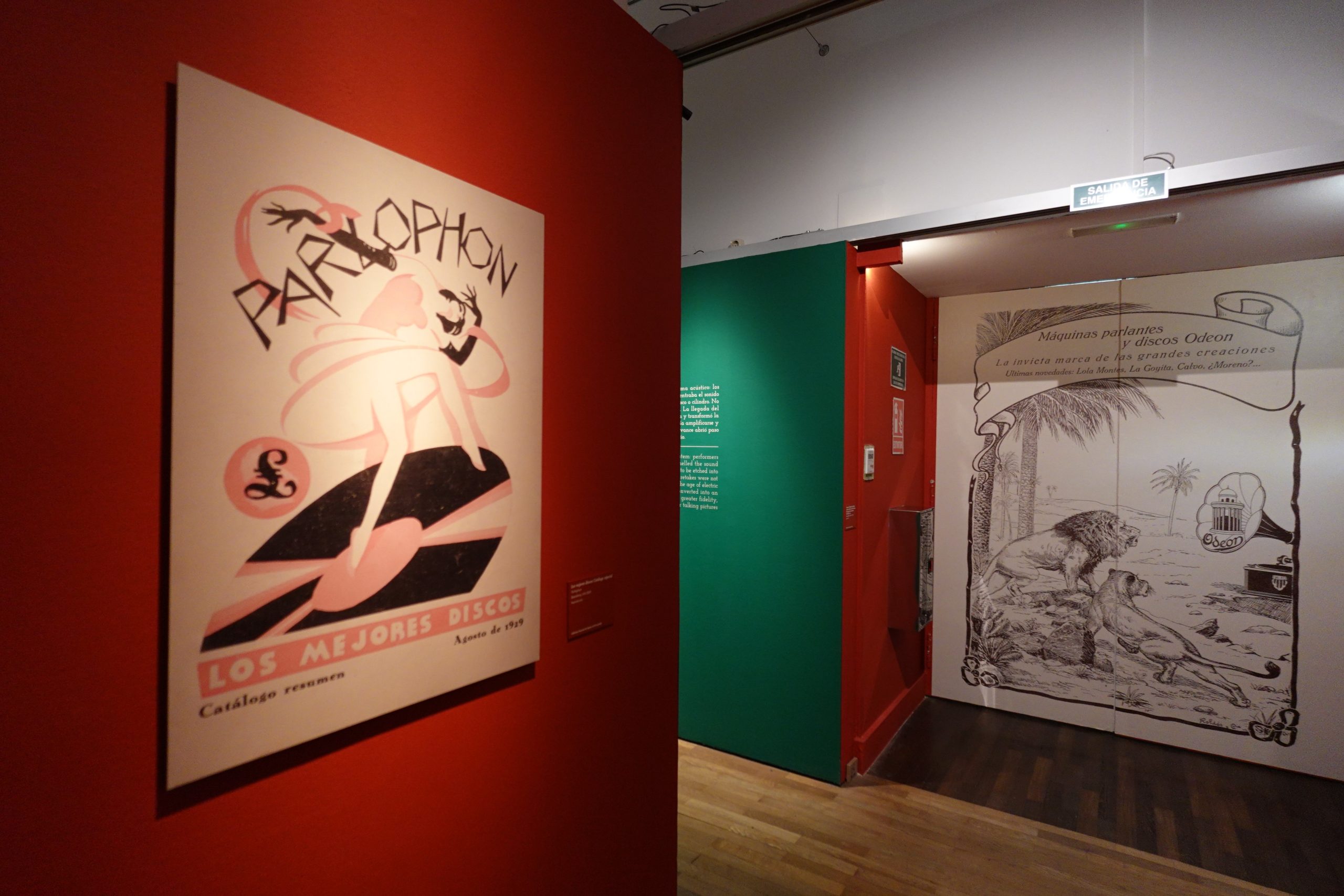
The exhibition allows visitors to approach these devices from both a historical and material perspective, showing their operation, their technical evolution, and their impact on everyday life. From this viewpoint, the objects on display are not presented merely as museum pieces, but as documents that speak of a society in transformation.
At the same time, the exhibition emphasizes an idea worth highlighting: to talk about sound is also to talk about the devices that make it possible. The way we listen is closely linked to how we have been able to store sound. From the wax cylinder to the digital archive, every format has transformed not only the technology but also the cultural experience of listening.
Preserving sound recordings means preserving cultural, social, and linguistic memory.
Sound, Consumption, and Visual Culture
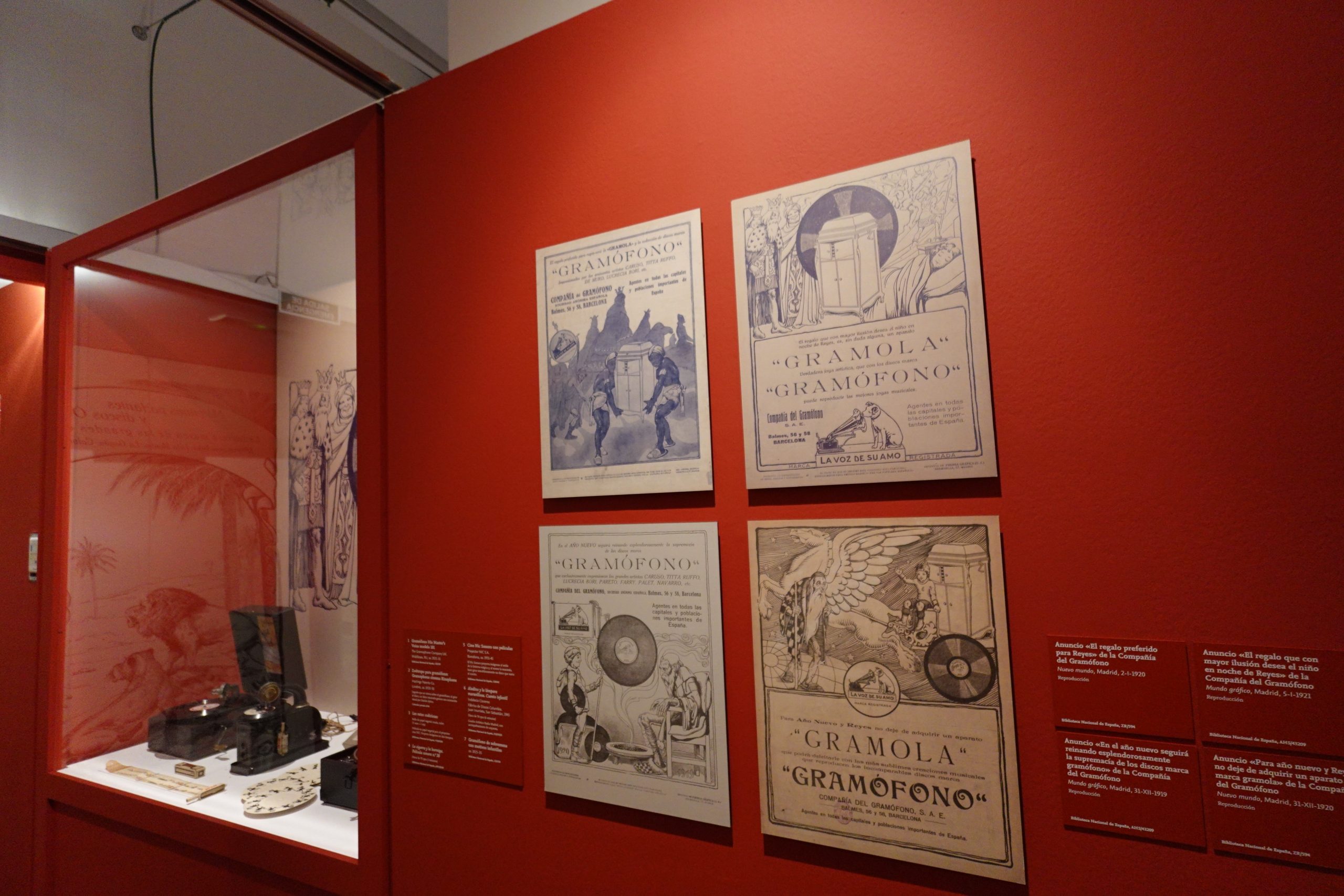
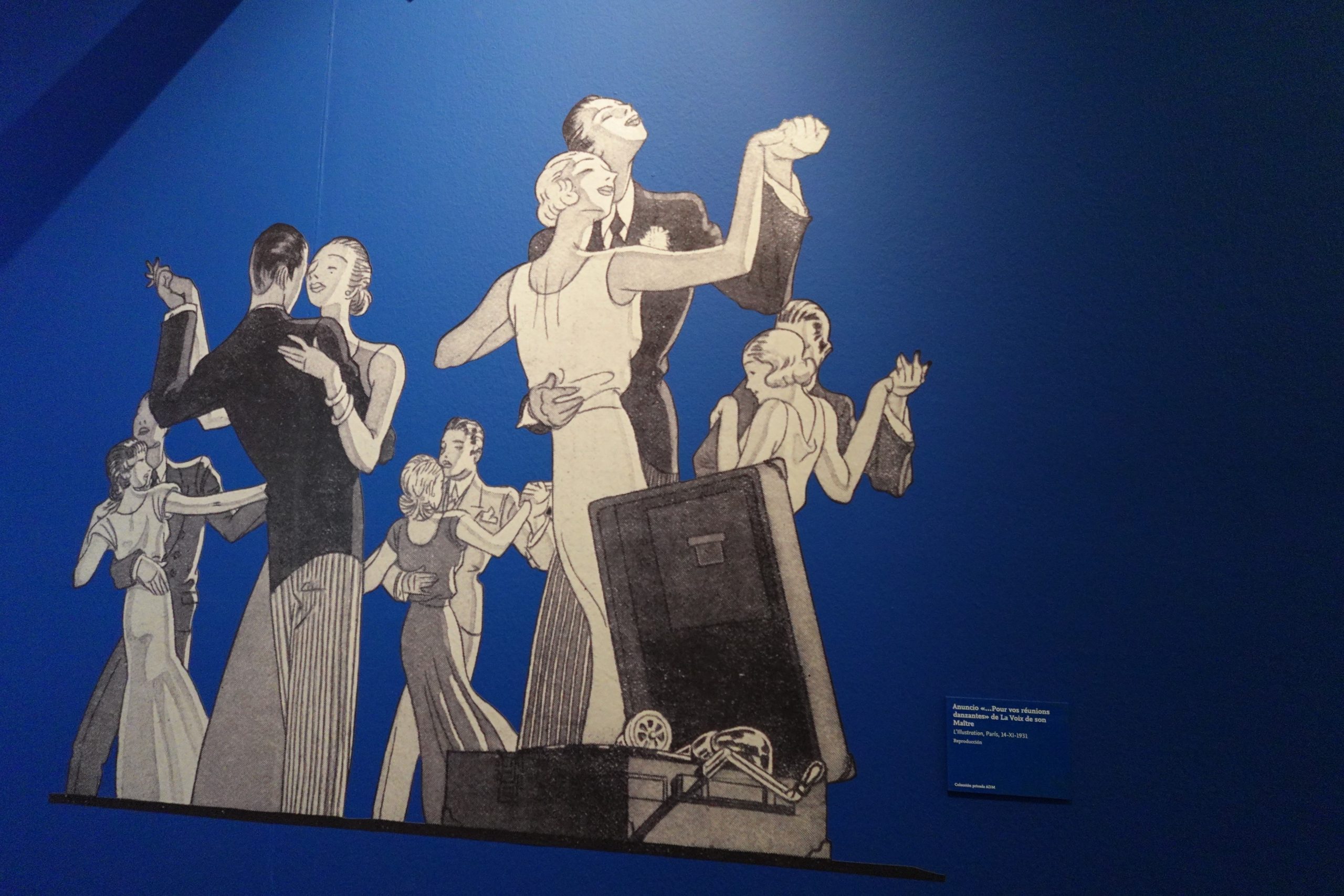
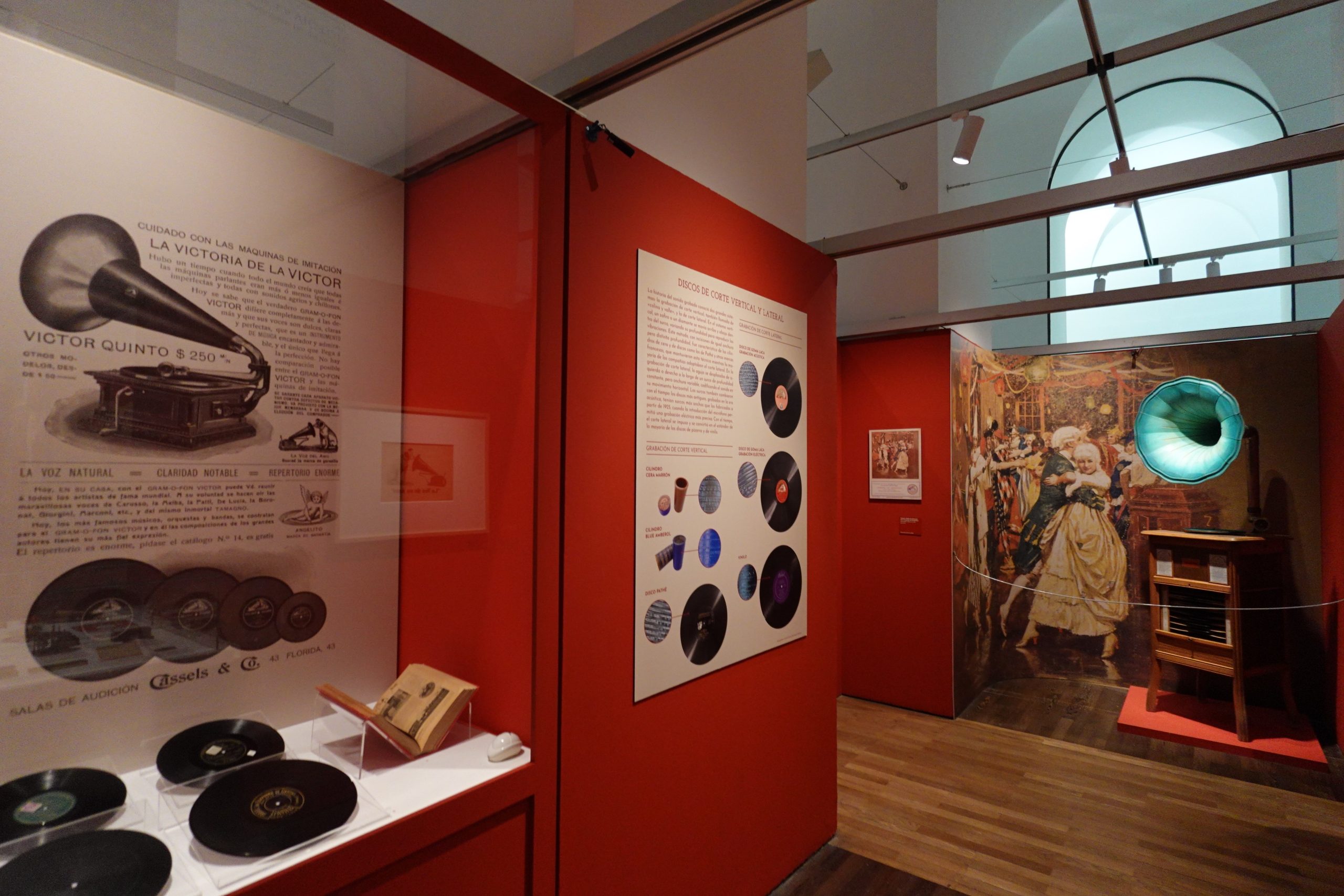
One of the central themes of the exhibition is the analysis of sound consumption and the importance of advertising in the diffusion of these new technologies. Through advertisements and graphic materials, the exhibition shows how the phonograph and the gramophone entered domestic spaces and how an imaginary surrounding home listening and sound leisure was constructed in early twentieth-century Spain.
From a documentary perspective, this approach is particularly interesting because it reveals the relationship between sound recordings and other types of documents—graphic, textual, and photographic—that help contextualize and enrich their interpretation.
Talking machines help us understand how technology transformed the way we listen to and preserve sound.
Sound Heritage as a Document
The narrative of Talking Machines: The Art of Capturing Sound is structured as an invitation to understand sound from multiple perspectives. Throughout the exhibition, visitors move from the earliest recording and playback devices—phonographs, gramophones, and their recordings—to the social, cultural, and commercial contexts that enabled their dissemination and use.
The different sections provide insight into recording technologies, forms of sound consumption, and the construction of a visual and advertising imaginary around talking machines. At the same time, the exhibition highlights sound collections, both institutional and private, and the diversity of content preserved on phonograph cylinders and shellac discs containing voices, popular music, speeches, and testimonies that constitute an essential source for the study of cultural, musical, and social history.
At this point, it is useful to emphasize that preserving sound means preserving memory. Sound recordings capture nuances of the voice, ways of speaking, forms of expression, and musical practices that reflect specific social and cultural contexts. As with other particularly vulnerable forms of heritage, their preservation requires the combination of technical expertise, documentary rigor, and sustained institutional commitment.
The management of sound heritage poses specific challenges in identification, conservation, digitization, and access.
Collections, Custody, and Professional Challenges
The exhibition gives a central role to collections of sound recordings and talking machines, bringing together institutional holdings from the National Library of Spain alongside materials from the Library of the Autonomous Community of Madrid, the Joaquín Díaz Ethnographic Museum, Eresbil (Basque Music Archive), the Museum of the School of Telecommunications Engineering, the Museum of Musical Ingenuity, the Museu de la Música, the Costume Museum, and the Luis Delgado Collection.
It also includes private collections of great historical value, among them those of Áurea Domínguez, José Luis Mur, Carlos Martín Ballester, and Pedro Martínez, whose collections and work have contributed decisively to the preservation and study of this heritage.
From the perspective of documentation, the exhibition highlights the complexity of the what and the how in phonographic recordings, as well as the challenges associated with their preservation, cataloguing, and access. Sound is therefore affirmed as a document in its own right, whose management requires specific technical knowledge and an interdisciplinary approach.
In everyday professional practice, these issues take the form of highly specific tasks that span the entire lifecycle of the sound document. They involve correctly identifying and describing the various formats and editions, addressing their technical characteristics and their state of preservation, applying preventive conservation measures that take into account the fragility of materials, the wear caused by playback, and environmental conditions, and defining clear criteria for digitization and restoration that ensure traceability, quality, and the correct distinction between master and access copies.
Added to this is the challenge of facilitating access and dissemination without putting preservation at risk, while also providing the necessary context for sounds to be properly understood. By explicitly linking the device with the recording, the exhibition helps make visible a fundamental idea: the sound document is not only content but also a medium and a chain of technical and cultural mediations.
Libraries, archives, and museums play a key role in the custody and transmission of sound memory.
Childhood, Collecting, and New Soundscapes
Other areas addressed in the exhibition broaden the perspective on phonography and its social impact: the relationship between childhood and sound, collecting as a way of preserving sound memory, and the emergence of new soundscapes linked to social and technological changes.
These perspectives contribute to building a plural narrative in which sound is understood as part of everyday life, but also as cultural heritage that deserves to be studied, preserved, and disseminated.
Áurea Domínguez
Academia de la Música de Basilea, Universidad de Ciencias Aplicadas y Artes del Noroeste de Suiza (FHNW)
María Jesús López
Biblioteca Nacional de España, Servicio de Documentos Sonoros y Audiovisuales
Comisarias de la exposición Máquinas parlantes: el arte de atrapar el sonido